
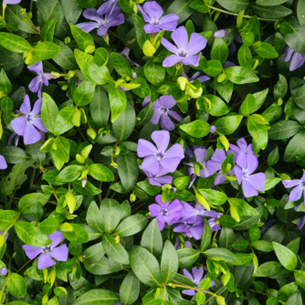
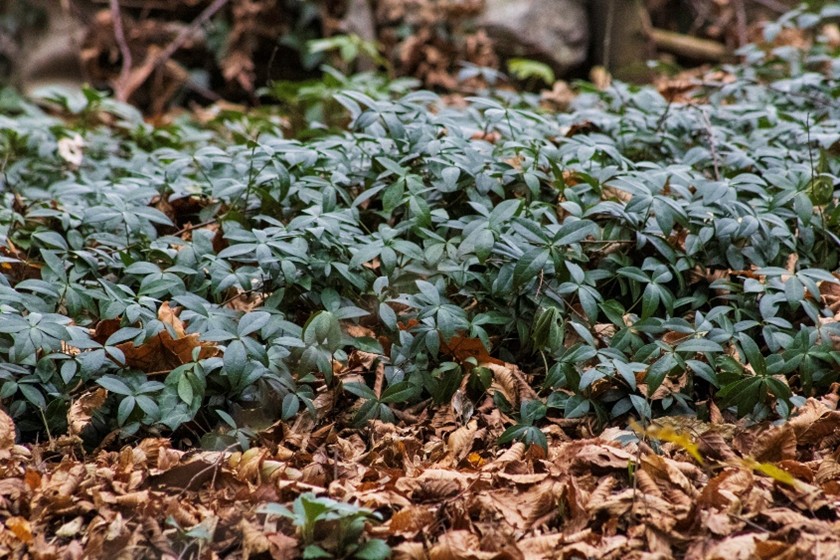
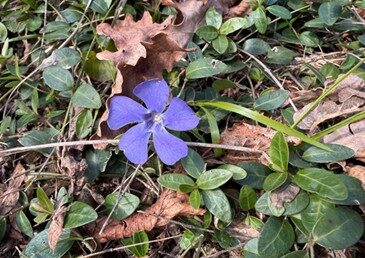
Height: 15-20 cm
Stems: Vertical variation of up to 15-20 cm in height and containing a single axial flower.
Horizontal variation growing as long as 1m in length and promoting vegetative reproduction.
Flowers: ~3 cm in diameter, with 5 blueish violet-coloured petals, of approximately 3-5 cm in length, in a symmetrical arrangement.
Leaves: Simple structure, oppositely arranged, green in colour with a leathery texture, elliptically shaped and pointed with short petioles.
Seeds: Contained within cylindrically shaped pods of approximately 1.5 – 3 cm in length.
- Vinca major (also invasive):
Vinca major is within the same genus as Vinca minor and shares many similar morphological attributes. Minor differences in features of V. major, such as larger petals of slightly different colour and the presence of small hairs around sepal and leaf margins, distinguish this closely related species from V. minor.
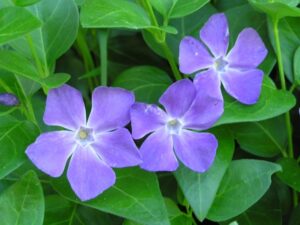
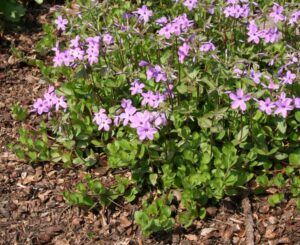
- Creeping Phlox (Phlox stolonifera)
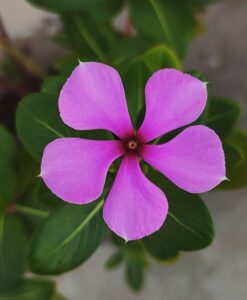
- Madagascar periwinkle (Catharanthus roseus)
Rapidly growing and capable of seed or vegetative mediated reproduction, flowering early in spring. Although tolerant of sunlight when access to water is abundant, the ideal conditions for growth are predominantly shaded areas, containing moist, fertile loam soil.
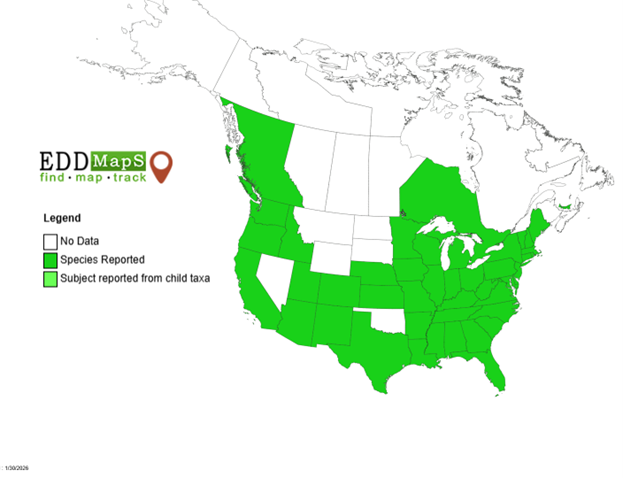
V. minor is native to parts of southern Europe and Asia and was transported to North America in the 1700’s for use as ornamental ground cover, eventually spreading and becoming invasive. Within Canada, V. minor is present in the provinces of British Columbia, Ontario, Quebec, New Brunswick, and Nova Scotia. It’s also present throughout most of the continental United States, being confirmed in a total of 40 states.
Environmental Impacts
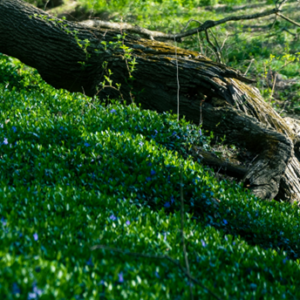
The propensity of V. minor to spread without the aid of human mediated dispersal, reproducing by seed germination or vegetative reproduction, often leads to colonization of areas adjacent to those in which this plant has been cultivated. Without management, rapid spread of V. minor can result in large areas of foliage coverage, causing detrimental ecological effects to the inhabited area. V. minor often forms dense understory mats of ground cover, which can deprive other vegetation of resources such as sunlight.
V. minor reduces the diversity of surrounding plant communities, preventing the occurrence of competitors by inhibiting the growth and reproduction of other species. The spread of V. minor can also impact biodiversity by altering the community composition of groups of organisms such as terrestrial arthropods and soil invertebrates. The harmful influence of V. minor on surrounding biodiversity can lead to negative effects such as disruption of the food web. The cascading ecological effects caused by invasive species such as V. minor, may result in populations of some species being reduced or eliminated from an area in which these foreign plants have become established.
Economic Impacts
If populations of species that hold economic value, such as those harvested by forestry or agriculture, are diminished or extirpated due to degraded ecological conditions caused by V. minor, these industries may suffer significant monetary loss. As these sectors often rely on a limited number of species of trees or edible crops, any reduction in population numbers has the potential to dramatically decrease production and yield, leading to a significant loss of revenue. In addition to causing revenue loss by reducing the availability of species that hold financial value, V. minor can be extremely time and resource consuming to control and eradicate once it has become established in an area, creating further economic burden. Sectors related to tourism or recreation within the affected areas can also suffer as changes to the ecosystem may make these locations less suited for these activities.
Social Impacts
Activities such as hikes, walks or organized sports that take place in venues such as forests or parks can create community interaction and connection with the natural world. When these areas can no longer be used for these purposes, individuals are deprived of the services previously provided by these locations, such as social involvement and access to nature, as well as the associated physical, mental, and emotional health benefits.
Manage
Once established, V. minor is likely to reproduce and expand its range rapidly, causing environmental, economic, and social consequences. If not addressed, the repercussions of V. minor can become more significant with time, highlighting the importance of effective prevention, monitoring, and control of this plant. Taking action to reduce the spread of V. minor and other invasive species is crucial to limiting the damage they cause as well as protecting our resources and future.
Prevent
Prevention is the most effective method to control invasive species like V. minor. Ensure clothing and shoes, as well as pets, are free of any plant materials such as seeds, stems, or roots following activities in or adjacent to locations in which V. minor is present to prevent inadvertent spread to areas that are not infested. Similarly, materials such as topsoil, mulch, or gravel should be inspected to ensure they are not contaminated with V. minor plant matter prior to transport.
Control
If V. minor is discovered within an area, taking prompt eradication measures is important to prevent its reproduction and subsequent spread.
Once established, removal of V. minor can be a time consuming and laborious task, often requiring extensive use of mechanical techniques such as digging and pulling. Due to the reproductive potential from stem and root segments, all plant material must be fully removed to ensure eradication from the area. Depending on the extent of the plant cover, effective removal may require several growing seasons to complete.
Cutting V. minor and then covering the area in ~10 cm of mulch is a relatively effective strategy for controlling small patches of growth in a home garden or yard. Mulching deprives the leaves of sunlight, which prevents photosynthesis, a process required for plant survival.
Synthetic herbicides can be useful when controlling periwinkle but should be used sparingly or in combination with other control methods if possible. It is important to read product labels thoroughly and follow application instructions to prevent risks to non-target organisms. Some have found success in using natural alternatives, such as pelargonic acid and cinnamon plus clove oils, to control invasive plants (though this can be more expensive and less effective, therefore requiring additional treatment applications) (Carreiro et al. 2020). For situations in which herbicides will be used, employing mechanical techniques such as mowing prior to herbicide application may potentially increase the efficacy of treatment on V. minor. To help prevent non-target effects on plant life in the treatment area, application of herbicide to V. minor should occur during the overwintering period of the non-target species whenever possible.
What you can do: Avoid cultivating Periwinkle by using alternatives for ornamental ground cover. If you witness someone intentionally growing this plant who may be unaware of its invasive status, inform them of the risks and suggest native alternatives. Report any sightings of V. minor using applications such as EDDMapS or iNaturalist.