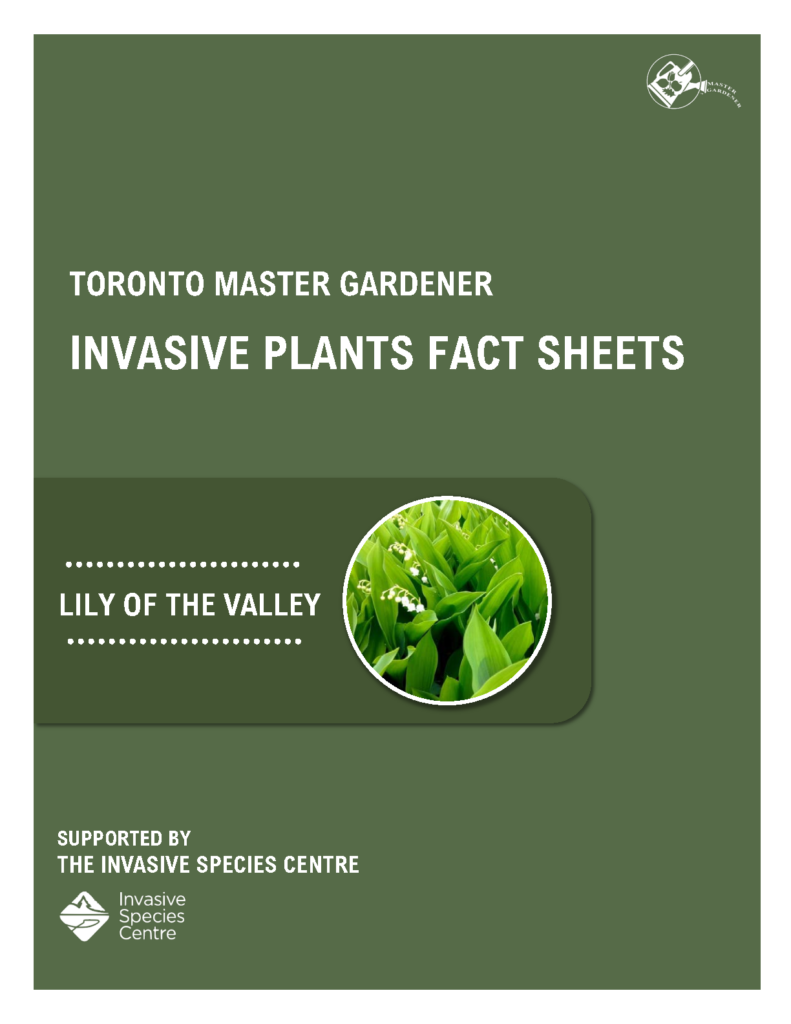
- Height: Lily of the valley can reach heights of 15 to 35 cm (0.15 – 0.35 m).
- Leaves: Paired oblong elliptic leaves vary in size but typically range from 5-20 cm long.
- Roots: Plants reproduce asexually from an underground network of rhizomes that spread horizontally with new shoots emerging from stolons.
- Flowers: A one-sided raceme (unbranched flower stalk) can have up to 16 white, bell-shaped, nodding flowers. Flower stalks are characteristically long and greater than ½ leaf length. Strong, sweet-scented flowers emerge in mid to late spring, blooming for 2 to 3 weeks.
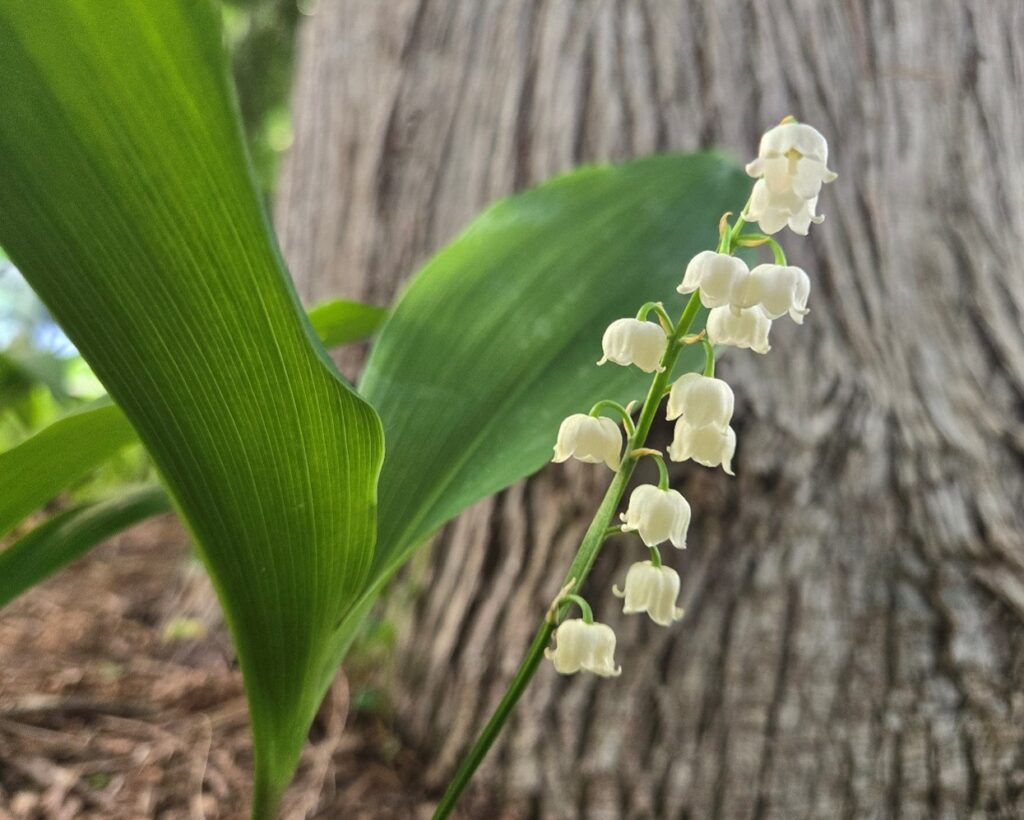
- Seeds and reproduction: Plants develop orange-red berries in the fall with 1-6 seeds per berry. Lily of the valley produces seeds after sexual reproduction, with colonies composed of genetically identical clones being self-incompatible.

Ansel Oommen, Bugwood.org
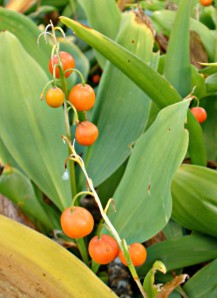
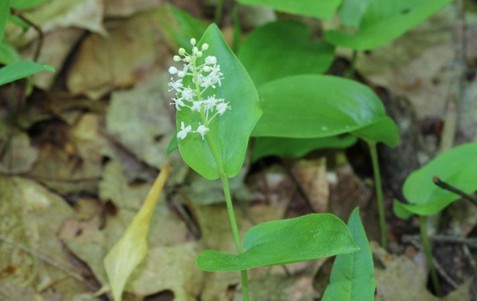
Canada mayflower (Maianthemum canadense): Also known as Canadian lily of the valley or false lily of the valley, it may be differentiated by broader leaves and a terminal cluster of white flowers. Plants are 10-25cm tall with 2 to 3 leaves. Considered one of most broadly distributed wildflowers across boreal forests, this native species can be found coast to coast across Canada, making it a recommended alternative to lily of the valley.
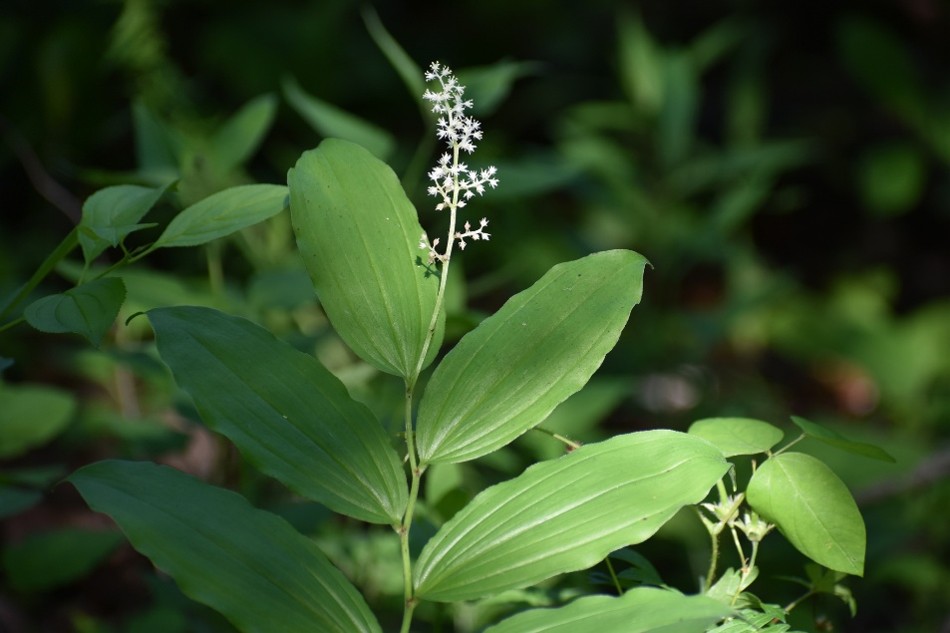
False Solomon’s Seal or Solomon’s plume (Maianthemum racemosa): Larger than lily of the valley, false Solomon’s seal is a 50-90 cm tall herbaceous perennial plant with 7–12 alternate, oblong-lanceolate leaves 7–15 cm in length. Native to Canada, this widespread species can be found in all provinces and territories apart from Nunavut and the Yukon, making it a great alternative to plant in place of lily of the valley.
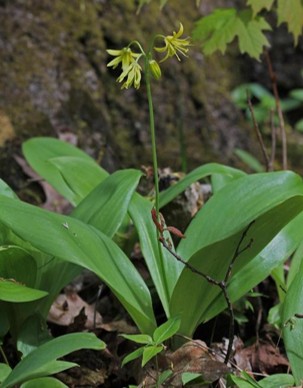
Bluebead Lily (Clintonia borealis): Part of the lily family, this small (5-10 cm tall) perennial plant has 2 to 4 characteristic curved leaves. Plants grow in homogeneous colonies and produce yellow flowers from their long stalk. Fruits are small semi-poisonous dark blue berries. This native flower can be found growing across the boreal forests of eastern Canada, with their range extending from Manitoba through to Newfoundland and Labrador. Plants require cool moist shaded areas to grow, making them a great alternative to lily of the valley in shade gardens.
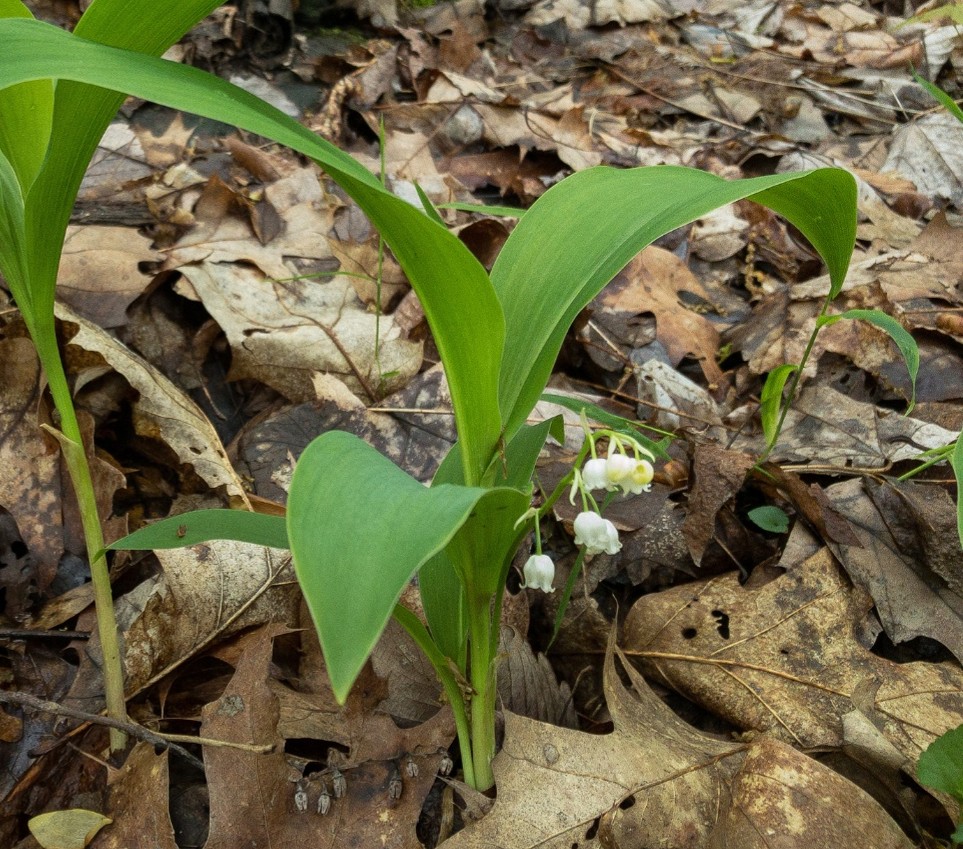
American lily of the valley (Convallaria pseudomajalis): Previously known as Convallaria majalis var. montana, this plant is now recognized as a distinct species native to the Southern Appalachians. Not typically found in Canada, it has a limited range in the United States from West Virginia and Virginia through North Carolina, Tennessee, Kentucky, South Carolina, and Georgia. It has also been observed in Ohio, Pennsylvania, and parts of New York. Unlike European lily of the valley, American lily of the valley is not typically used or sold as an ornamental gardening plant and should not be planted outside its native range. This species grows in isolated, high-elevated rocky habitats and does not form dense clonal colonies. Leaves are larger than European lily of the valley, and flower stalks are characteristically short (less than ½ the length of leaves).
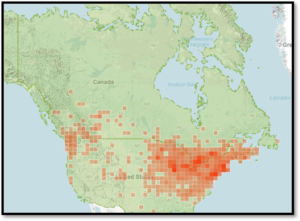
In its invasive range, lily of the valley can be encountered in Canada’s Atlantic and Central areas, with established populations recorded in Ontario, Quebec, New Brunswick, Nova Scotia, and Prince Edward Island. This plant has also been observed in Manitoba, Saskatchewan, Alberta, and British Columbia.
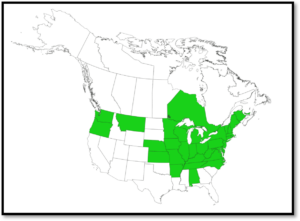
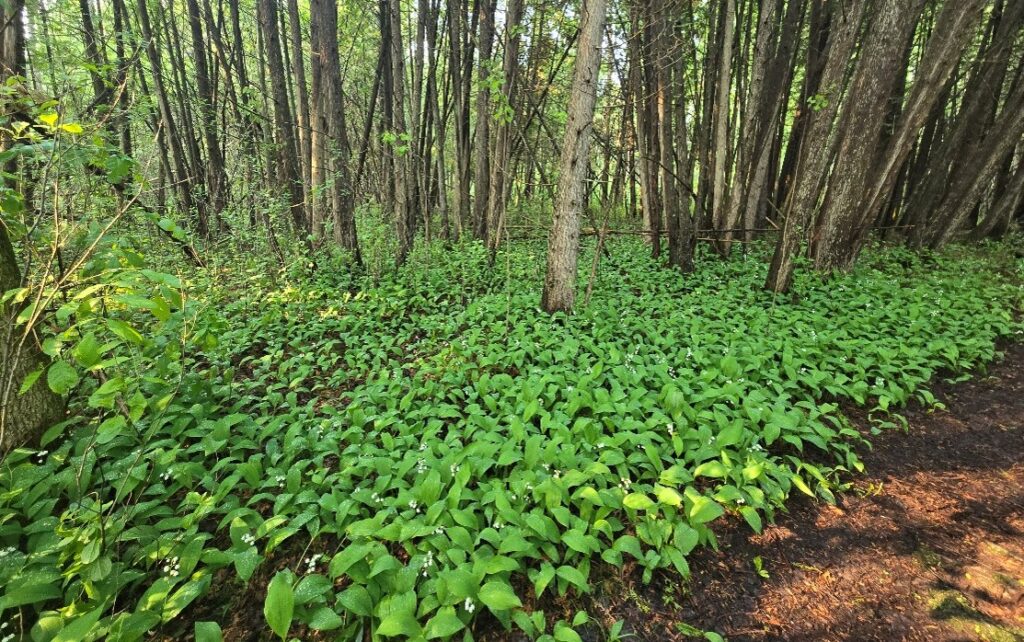
Lily of the valley is an aggressive invasive plant capable of rapidly spreading underground from horizontal rhizomes, forming extensive dense clonal monocultures that outcompete native vegetation, displace native habitats, and reduce native biodiversity. Originally introduced to North America as a garden ornamental, lily of the valley is a tolerant species able to survive across various soil types and grow in both full sun and full shade. Once a population is introduced, plants are able to asexually reproduce through rhizome root systems or sexually through the production of flowers and fruit giving them an advantage over many native species. Furthermore, these invasive plants have a low wildlife value, often being left untouched by animals as all parts of the plant are highly toxic to most mammals, causing sickness and potentially death in both wildlife and livestock if ingested.
Prevention is the most effective method to control aggressive invasive species like C. majalis. Do not purchase, plant, or transplant lily of the valley and ensure soil is not contaminated. Avoid cultivating lily of the valley by using alternatives for ornamental ground cover. If you witness someone intentionally growing this plant who may be unaware of its invasive status, inform them of the risks and suggest native alternatives. Report any sightings of lily of the valley using applications such as EDDMapS or iNaturalist.
Mechanical Control:
Manual removal: Physical removal of invasive lily of the valley relies on the full removal of both plants and root systems to prevent further spread. For smaller populations, plants should be fully dug up before they set seed. Removal may need to be done for several years before the seed bank in the soil is depleted. The rhizomes of plants may resprout even from fragmented pieces. To prevent resprout, soil should be dug up to a depth of 60 cm (0.6 m) and be screened to remove roots. If the entire root system is not removed, the plant will continue to spread. All plant parts must be sealed in bags for disposal. Dispose of pulled and cut invasive plants in black garbage bags and let them sit in the sun on a hard surface for at least a week. Don’t discard invasive plants in the compost or natural areas as this may lead to further spread.
Smothering: Depriving plants of light will make plants unable to photosynthesize, leading to death. To effectively smother a population of lily of the valley, a weighted tarpaulin or thick mulch on top of cardboard should fully cover the affected area to block sunlight. While this process can be started at any time of year, it may take one to two years of cover to be effective.
Chemical Control:
Systemic herbicides are considered the most effective chemical treatment for lily of the valley as selective or organic herbicides will typically be unable to reach the rhizomes of plants. Systemic herbicides are absorbed by a plant’s foliage to directly target their vascular system down to the roots. In Ontario, herbicide use, storage, and disposal is regulated under the Pesticides Act. Herbicides must be applied in accordance with all label directions. Lily of the valley can be effectively managed by using the non-selective, post-emergent systemic herbicide glyphosate. Anyone using a pesticide is responsible for complying with all federal and provincial legislation. Most non-domestic (i.e. commercial, restricted etc.) herbicides can only be applied by licensed exterminators. For more information, refer to the Ontario Pesticides Act and Ontario Regulation 63/09 (available on www.e-laws.gov.on.ca), or contact the Ontario Ministry of the Environment (http://www.ene.gov.on.ca/environment).
Timing is key with herbicide application, with the best window to treat lily of the valley being in spring or early fall. Depending on the density of the lily of the valley colony, plants may require herbicide application over a few years. Glyphosate is a non-selective herbicide which means it will kill most green plants it comes into contact with, making consideration of native species an important part of developing a treatment strategy.
Biocontrol:
There are currently no confirmed biocontrol options available for lily of the valley.