
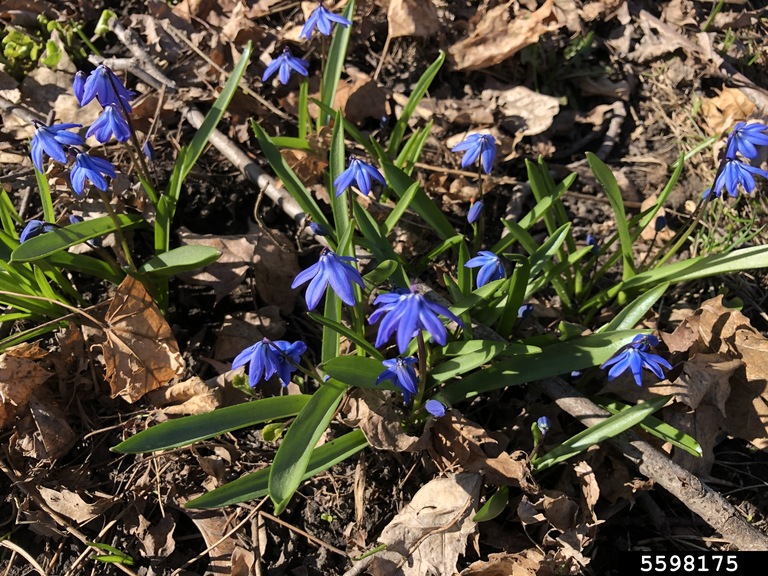
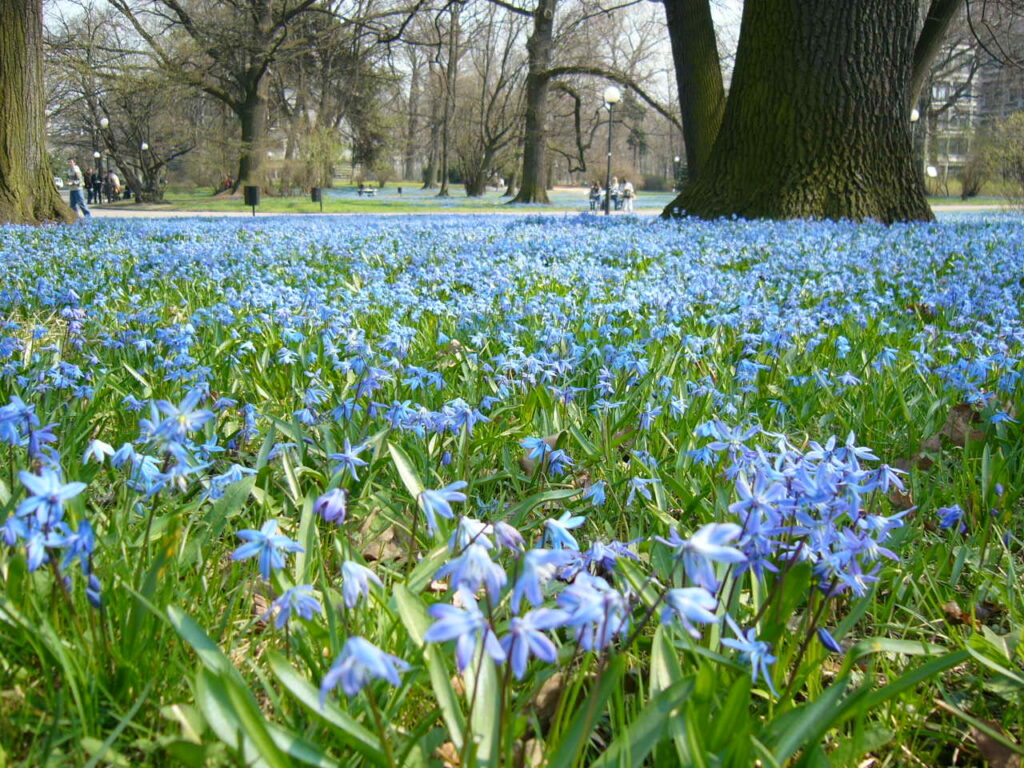
Siberian squill is a small bulbous perennial that typically grows 10–20 cm (4–8 in) tall and about 5 cm (2 in) wide. In early spring, it produces two to four grass- leaves alongside nodding, blue, bell-shaped flowers.
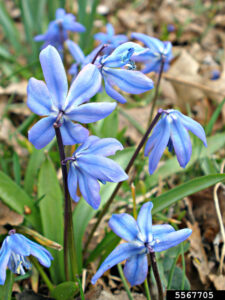
Stem: One or more arching, hairless flower stalks form from the center of the rosette.
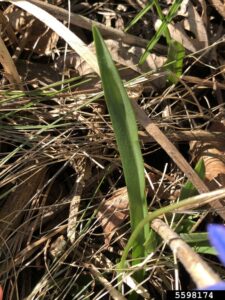
Leaves: 5-inch-long, grass-like, hairless leaves emerge from one point.
Flowers: 1-inch-wide, bell-shaped flowers occur singly or in a group of 2-3 at the top of a slim stem. The flower consists of six flaring, blue petals with a dark blue center strip and six white stamens with blue tips. Flower color may vary by variety and can include white, pink, or violet.
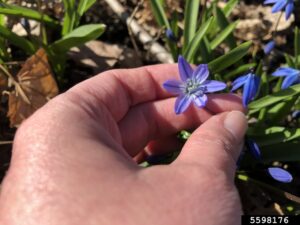
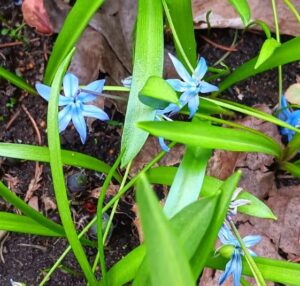
Seeds: Seed capsules are green and bumpy, turning brown as they mature and split to produce dark, reddish-brown seeds.
Roots: Egg-shaped underground bulb
Some other early spring flowers may be mistaken for Siberian squill. Learn about look-a-likes to avoid false identification.
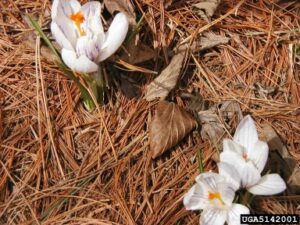
Crocus (Crocus vernus) is another one of the first plants to emerge and flower in the spring in some regions. This non-native bulb is commonly planted in yards and gardens. Flowers have 6 petals, are 2-3 inches across, and range from white to purple.
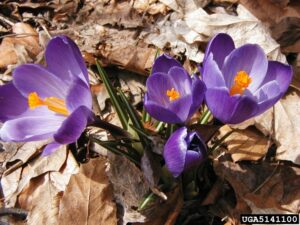
Glory of the snow (Chionodoxa luciliae) is another very early blooming non-native bulb with 6 thin flower petals that are purple with white near the center.
Siberian squill is a spring ephemeral, emerging early and blooming right after the snow melts. It is one of the very first flowers to bloom in early spring, often growing in large clumps or patches. Blooming period typically extends from March – May depending on the region.
Siberian squill conducts all its growing early in the spring and dies back once the forest trees are fully leafed out. It then grows as a bulb, during the summer, fall and winter.
Siberian Squill requires abundant sunlight but is often found as a ground cover in woodlands, growing early in the spring before trees are leafed out. It is very commonly found in residential gardens and yards.
Siberian squill is native to southwestern Russia, the Caucasus, and Turkey. Despite its name, it is not native to Siberia. It was introduced to North America from Eurasia in 1796 and continues to be spread through cultivation as a garden plant.
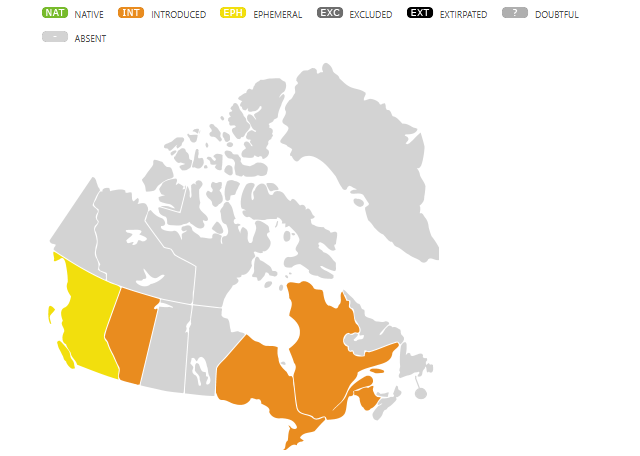
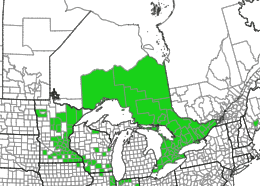
In the U.S.A., Siberian squill has been reported in the Northeast in states including Minnesota, Wisconsin, Michigan, Maine, New Hampshire, Indiana, and Virginia. In Canada, Siberian squill is present in Ontario, Quebec, New Brunswick, Alberta, and British Columbia. (See the Canadian database for more information). On EDDMapS, it has been reported in Ontario in all regions except for Northwestern Ontario.
Ecological
Siberian squill grows prolifically, outcompeting native vegetation. It is a cold tolerant plant which sprouts early in the season and can spread rapidly underground. A poisonous plant, it is often left untouched by local wildlife, giving it an additional competitive advantage against native plant species vulnerable to grazing. In spring, it can coat the forest floor, stopping native species from emerging and impacting biodiversity and food webs.